Innomec · Applied Engineering
Innomec: Engineering and development of technical solutions for complex projects
In highly complex technical projects, design alone is not enough. The difference lies in validating, optimizing, and documenting the solution before manufacturing, intervening, or scaling a system.
Article content
- What kind of technical problems does Innomec solve?
- Why design, simulation, and validation should be integrated
- How 3D modeling, FEA, CFD and reverse engineering are combined
- What value does this approach bring to complex projects?
Idea central
Reduce technical uncertainty
Applied engineering gains value when the solution is modeled, simulated, and documented in sufficient depth before moving on to manufacturing, maintenance, or redesign.
This type of situation is especially common when working with critical components, demanding mechanical systems, or industrial environments where operating conditions are variable and highly demanding. In these contexts, traditional engineering based solely on manual calculations or conceptual design is insufficient. What is required is a combination of design, modeling, simulation, and validation that allows for the reduction of technical uncertainty before manufacturing, modifying, or scaling up a solution.
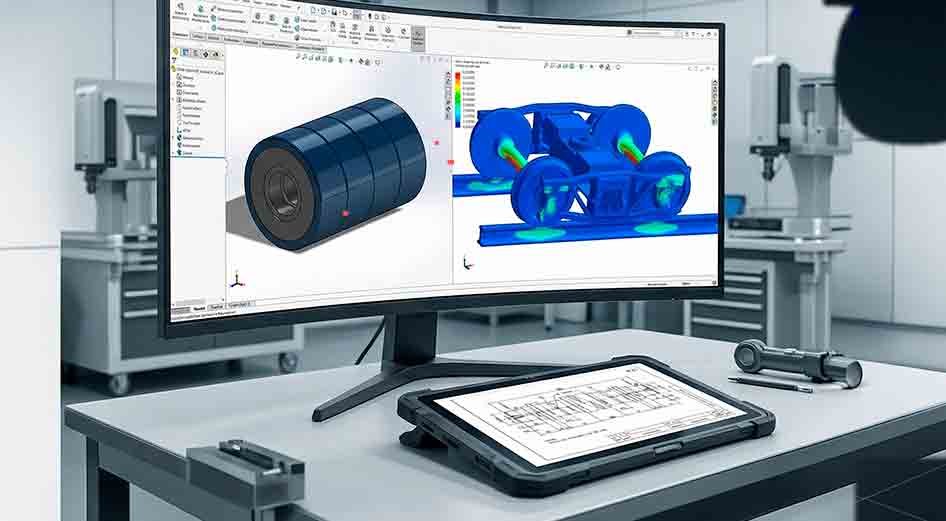
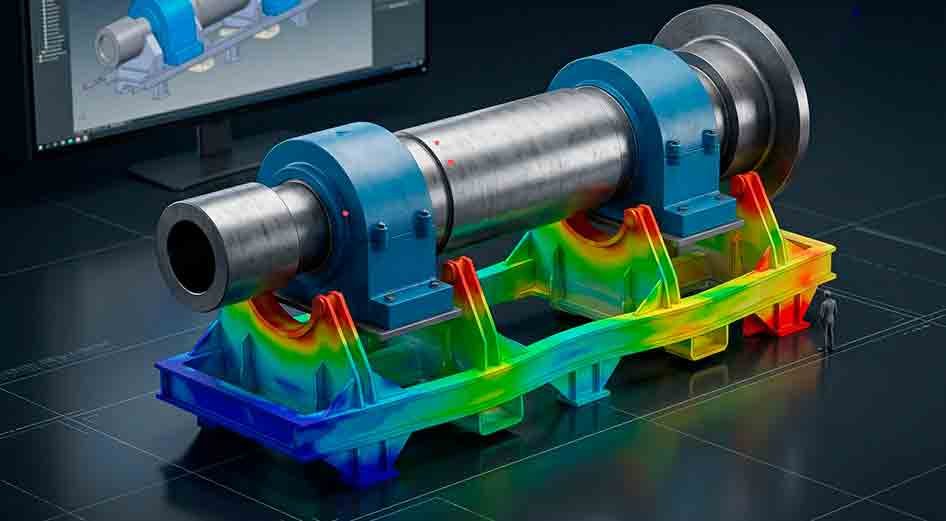
Validating a solution before implementing it allows you to anticipate performance problems, reduce technical risk, and improve decision-making.
More than design: the value lies in developing complete technical solutions
It is precisely at this point that companies like Innomec add value. Rather than offering isolated services, their focus is on developing complete technical solutions, capable of integrating 3D modeling, advanced simulation, and performance analysis to address complex problems in a structured way.
Unlike fragmented approaches, where design, analysis, and validation are performed independently, developing effective technical solutions requires an integrated perspective. A component must not only conform to a specific shape or geometry but also respond appropriately to structural stresses, thermal conditions, fluid interaction, load cycles, and potential failure scenarios.
Designing is not enough
In complex projects, the quality of the solution depends on its technical validation, not just its form or conceptual feasibility.
What problems does an applied engineering company like Innomec solve?
One of the most common mistakes in engineering projects is moving directly to manufacturing without validating the design's performance. This can lead to anything from minor performance issues to critical failures that require a complete redesign. In both cases, the economic and operational impact is usually significant.
Advanced simulation allows this problem to be addressed proactively. Tools such as finite element analysis or computational fluid dynamics simulation make it possible to model the actual behavior of a component or system under specific conditions. This includes analyzing deformations, stresses, fatigue, heat transfer, fluid behavior, and numerous other variables that cannot be directly observed at a conceptual stage.
Design and modeling
Precise construction of parts, assemblies and systems on a geometric basis usable for analysis, manufacturing and documentation.
Structural validation
Review of stress, deformation, fatigue, dynamic response, impact or thermal behavior before execution.
Fluid analysis
Evaluation of flow, heat transfer and hydraulic or aerodynamic performance in complex scenarios.
Modeling and simulation to make better decisions
Beyond the tool itself, the value lies in the approach. Simulation is not simply about testing a model, but about building an analytical environment that allows you to understand how the solution will behave under real-world conditions. This enables more informed decision-making, optimizes the design, and reduces risks before moving on to more costly stages.
In this context, 3D modeling plays a fundamental role. It's not just about generating a visual representation of the component, but about building a precise geometric foundation upon which subsequent analyses will be based. A well-constructed model allows for the integration of simulations, the generation of technical documentation, the facilitation of manufacturing processes, and the maintenance of traceability throughout the project's development.
A well-developed technical solution is not measured solely by its initial design, but by its ability to sustain performance, safety, and manufacturability under real-world conditions.
Reverse engineering and 3D scanning: when you have to work on what already exists
Another key aspect of complex projects is the ability to work on existing systems. In many cases, companies need to modify equipment or components for which there are no up-to-date blueprints or reliable technical documentation. This is where reverse engineering and 3D scanning become critical tools.
Through these techniques, it is possible to digitize physical components, reconstruct their geometry, and generate models that allow for their analysis, modification, or reproduction. This not only facilitates maintenance and repair processes but also opens the possibility of optimizing existing designs and adapting them to new operating conditions.
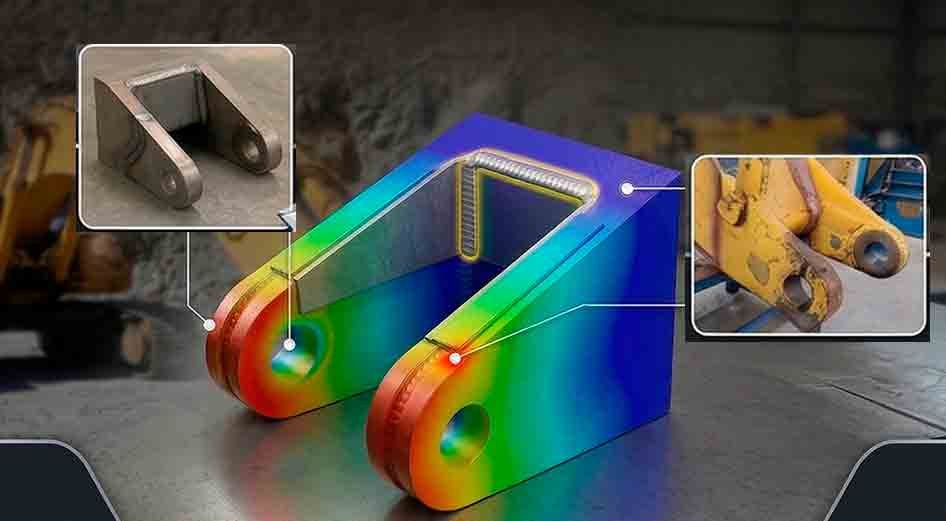
When reliable documentation is unavailable, digitization and geometric reconstruction allow for the recovery of critical information for redesign or validation.
Methodology matters as much as the tool.
The combination of design, simulation, and reverse engineering allows us to address a wide variety of technical challenges. From developing new components to optimizing existing systems, and from failure analysis to performance enhancement, this approach provides a solid foundation for decision-making in complex environments.
A key differentiator in these types of services is the work methodology. Beyond the tools used, the way the development process is structured is what allows for consistent results. In Innomec's case, this process is based on a clear sequence that begins with defining requirements and progresses through conceptual design, 3D modeling, simulation, optimization, detailed engineering, and the delivery of technical documentation.
01
Requirements
Information, restrictions, and technical objectives of the project or component are gathered.
02
Conceptual design
Alternative solutions are proposed and their initial technical feasibility is evaluated.
03
Modeling and simulation
The geometry is developed and its behavior is validated using FEA, CFD or other analyses.
04
Detail and delivery
Plans, specifications, models, reports, and implementation support are generated.
Why this approach is useful in complex, multi-sector projects
The applicability of this approach is broad across multiple industries. Sectors such as mining, energy, metalworking, construction, and transportation face technical challenges that require specific, often non-standard, solutions. In these contexts, having advanced design and simulation capabilities allows companies to address problems that cannot be solved with generic solutions.
For example, in systems subjected to high loads or intensive wear conditions, structural analysis allows for the identification of critical points and the optimization of the design to increase its lifespan. In systems involving fluids, CFD simulation allows for improved efficiency, reduced losses, or the prevention of operational problems. In existing components, reverse engineering allows for the recovery of key information for redesign or replication.
Common mistakes in complex technical projects
- Manufacturing or intervening without having validated the behavior of the solution.
- Designing solely from geometry, without considering loads, fatigue, flow, or heat transfer.
- Relying on incomplete or outdated documentation to redesign components.
- Separating the analysis too much from the actual manufacturing, maintenance, or use process.
- Correcting only after the failure, when the technical and operational cost is already higher.
Clear deliverables: where engineering becomes usable
Another important aspect is the quality of the deliverables. In technical projects, simply generating a design or analysis is not enough; the information must be clear, traceable, and usable. Technical documentation, drawings, models, and reports must enable other teams—manufacturing, maintenance, operation, or validation—to work efficiently with the solution.
In this sense, a good engineering solution doesn't end with the analysis, but rather with its ability to be implemented correctly. This requires a level of detail and clarity that is often underestimated, but which is critical to the project's success.
What does a well-developed solution offer?
Greater technical precision
Decisions are based on modeling, analysis, and validation, not just assumptions.
Lower risk of failure
Early validation allows for the detection of weaknesses before manufacturing or intervention.
Improved traceability
Models, plans, and reports provide a clear basis for manufacturing or maintenance.
Greater optimization capacity
The design can be iterated with evidence to improve performance, weight, strength, or efficiency.
Innomec’s role within the InnoBahn ecosystem
Within the InnoBahn ecosystem, Innomec's role is understood as a natural extension into applied engineering. While InnoBahn focuses on the planning, design, and optimization of systems, particularly in the railway sector, Innomec contributes specific capabilities to address technical challenges at the component, structural, and mechanical system levels. On its website, Innomec presents itself as an InnoBahn company and states applications in mining, energy, transportation, metalworking, construction, and R&D, reinforcing its cross-cutting nature.
This complementarity allows us to cover a broader spectrum of needs. From defining a system to solving specific technical problems, the combination of both capabilities strengthens the value proposition and allows us to support projects at different stages of their development.
Conclusion
In an environment where projects are increasingly demanding and the margin for error is ever smaller, having tools that allow for the validation of technical decisions before implementation becomes fundamental. The integration of design, simulation, and analysis is not only a competitive advantage but also a necessary condition for developing robust, efficient, and sustainable solutions.
Ultimately, engineering applied to complex projects requires more than just technical knowledge. It requires methodology, tools, and a way of working capable of transforming uncertainty into informed decisions. In this context, Innomec doesn't just perform engineering: it provides a critical layer of validation and development that improves the quality and feasibility of the solutions.
FAQ
Frequently Asked Questions
What kind of problems does Innomec solve?
Problems associated with mechanical design, structural validation, fluid simulation, failure analysis, reverse engineering, component optimization, and technical documentation for manufacturing or intervention.
When is it appropriate to use FEA or CFD simulation?
When it is necessary to validate behavior before manufacturing or redesigning, check structural safety, review fatigue, analyze flow, heat transfer, or optimize an engineering-based technical solution.
What is the difference between 3D modeling and technical validation?
3D modeling defines the geometry and digital basis of the design. Technical validation verifies whether that solution will function under real-world loads, thermal conditions, fluids, or operating scenarios.
What is the purpose of reverse engineering in industrial projects?
It allows you to rebuild existing parts or systems when there is no reliable documentation, generate CAD models, redesign components, and prepare useful information for maintenance, replication, or optimization.
Next step
Do you have a technical challenge to solve?
Properly designing, validating, and documenting a solution can reduce technical risk, improve performance, and accelerate implementation decisions.