Railway consulting: how to choose the right company to design and optimize your project
Choosing a railway consultancy is not a simple administrative procedure. It is a strategic decision that determines the technical feasibility, operational efficiency, and economic sustainability of the project from its very inception.
- What does a railway consultancy actually solve?
- What mistakes to avoid when hiring technical support
- What capabilities to review before awarding
- Why simulation and operation should be involved from the start
Aimed at companies, operators, consultancies, clients and the public sector that need to evaluate suppliers with technical and business criteria.
Railway consulting is one of the most decisive factors in the success or failure of a transport project. Unlike other sectors, where certain errors can be corrected during implementation without completely compromising the system, in the railway sector, initial decisions directly affect investment, operation, safety, future capacity, and the project's sustainability for decades.
Therefore, choosing a railway consulting firm should not be seen as a mere administrative step in the timeline, but as a strategic decision. What's at stake is not just the quality of a study or engineering work, but the quality of the decisions that will be made based on that work. A weak definition in the early stages can lead to oversized infrastructure, miscalculated capacities, unresolved operational conflicts, incompatibilities between subsystems, or service models that are impossible to sustain in real-world operation.
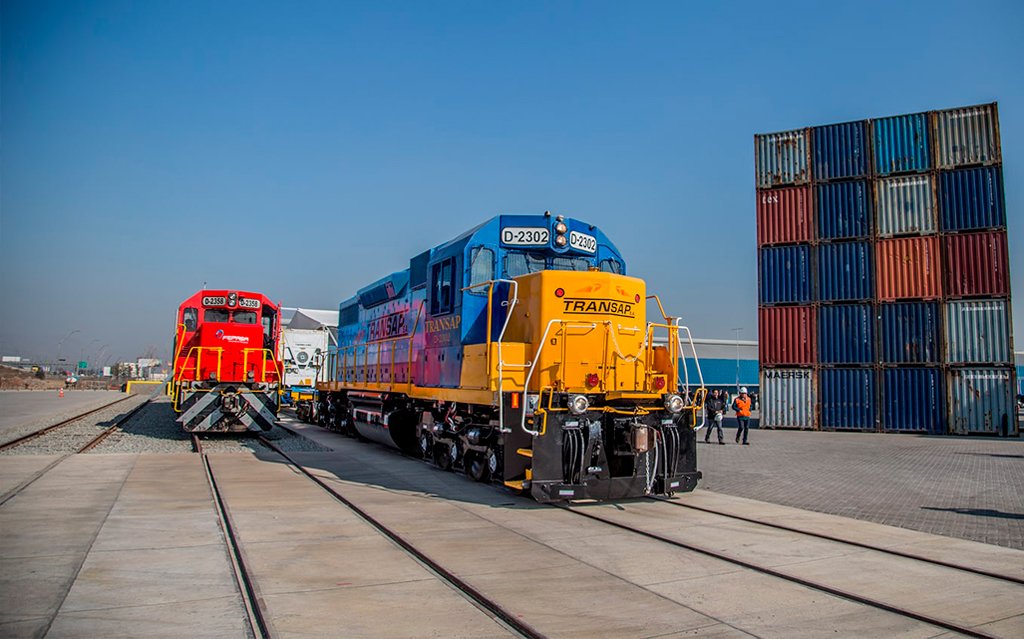 The quality of the project is defined long before the work: it begins in the planning, evaluation and operational validation stage.
The true role of railway consulting
In practical terms, a railway consultancy doesn't simply solve a design problem. Its primary function is to transform a project idea into a viable, validated, and executable solution. This requires looking at the entire system, not just a single discipline. A railway project is not just track alignment, signaling, stations, or rolling stock. It's a complex system where infrastructure, energy, operations, communications, terminals, regulations, and user experience must function in an integrated manner.
When a contracting company seeks specialized support, it typically tries to answer one or more critical questions. Is the proposed solution technically feasible? Does the infrastructure support the expected operation? Is the promised frequency truly achievable? Is the investment appropriately sized? Can the system grow without having to rework key components? Are the technological decisions aligned with the service model? High-level rail consulting exists precisely to reduce this uncertainty before committing to CAPEX, schedules, and institutional expectations.
Good railway consultancy does not just document a solution: it helps to avoid structural errors before the project enters a costly implementation phase.
Why do so many projects fail in the definition stage?
Many projects don't fail due to budget constraints or a lack of institutional will. They fail because they were defined with an incomplete understanding of the system. It's common for a solution to progress too quickly to basic or detailed engineering without properly finalizing the operating model, capacity logic, terminal behavior, subsystem compatibility, or the real impact of regulatory and physical constraints.
One of the most common mistakes is treating the project as a collection of isolated specialties. Civil works are developed separately, signaling separately, fleet sizing separately, and operations as an afterthought. This fragmented approach can produce technically sound deliverables for each discipline, but inconsistent ones as a whole. The result is a project with integration friction, inefficiencies, or limitations that only surface once the solution is already well underway.

Insufficient definition
Engineering is progressing too quickly without having validated the complete system, its constraints, and its service objectives.

Lack of simulation
The solution is designed in theory, but it is not tested in realistic operational scenarios before investing.

Fragmented vision
The disciplines work separately and the system loses coherence between infrastructure, operation and technology.
Capacity, operation and interoperability: the technical core of the decision
Among all the challenges a railway project faces, capacity is one of the most critical. It is not enough to estimate how many passengers or tons of freight the system might use. It is necessary to demonstrate that the infrastructure and operation can robustly support that demand. This requires reviewing journey times, intervals between trains, route conflicts, crossings, overtaking, terminal restrictions, regulation times, yard utilization, and response to disruptions.
When this assessment is not conducted thoroughly enough, the project often falls into one of two extremes. The first is over-dimensioning: excessive investment in infrastructure is made for fear of falling short. The second is under-dimensioning: apparent CAPEX is optimized, but a permanent operational constraint is left in place. Both scenarios are costly, and both stem from the same cause: decisions made without serious operational validation.
Added to this is interoperability. Railway systems must coherently integrate rolling stock, signaling, power, telecommunications, facilities, and operational logic. A poorly resolved decision in any of these areas can limit future capacity, necessitate costly adaptations, or compromise the system's safety and maintainability. Therefore, a reputable consultancy must demonstrate not only an understanding of one discipline but also mastery of the interfaces between disciplines.
In railways, a good solution is not the one that looks good on paper, but the one that continues to work when it goes into real operation, with restrictions, variability and future growth.
How the best railway consultancies work
Consulting firms that truly add value don't just deliver descriptive reports. They work with structured methodologies that combine diagnosis, alternative development, modeling, simulation, and comprehensive evaluation. Instead of starting from an assumed solution, they begin with a service question: what do we want to achieve, for whom, with what performance standards, and under what technical, regulatory, and economic constraints?
Based on this framework, alternative solutions are developed. These can vary in terms of route, operational configuration, technology, stations, terminals, signaling, energy, or implementation strategy. The key is that these alternatives should not be compared solely on investment cost, but also on capacity, operational robustness, maintainability, interoperability, and growth potential.
Definition of objectives
It is specified what service the system should provide and what its actual limitations are.
Solution alternatives
Comparable options are developed from a technical, operational, and economic perspective.
Modeling and simulation
It is validated whether the solution actually works in consistent operational scenarios.
Comprehensive evaluation
The best alternative is selected based on evidence and not on partial assumptions.
La simulación ferroviaria, tanto a nivel macro como micro, cumple aquí un rol central. Permite anticipar conflictos, revisar capacidad de línea, validar frecuencia, ajustar terminales y comprobar que el modelo de operación es consistente con la infraestructura propuesta. Este punto conecta directamente con el posicionamiento actual de InnoBahn en diseño, simulación, optimización operativa y benchmarking, que ya forma parte del discurso principal del sitio. :contentReference[oaicite:2]{index=2}
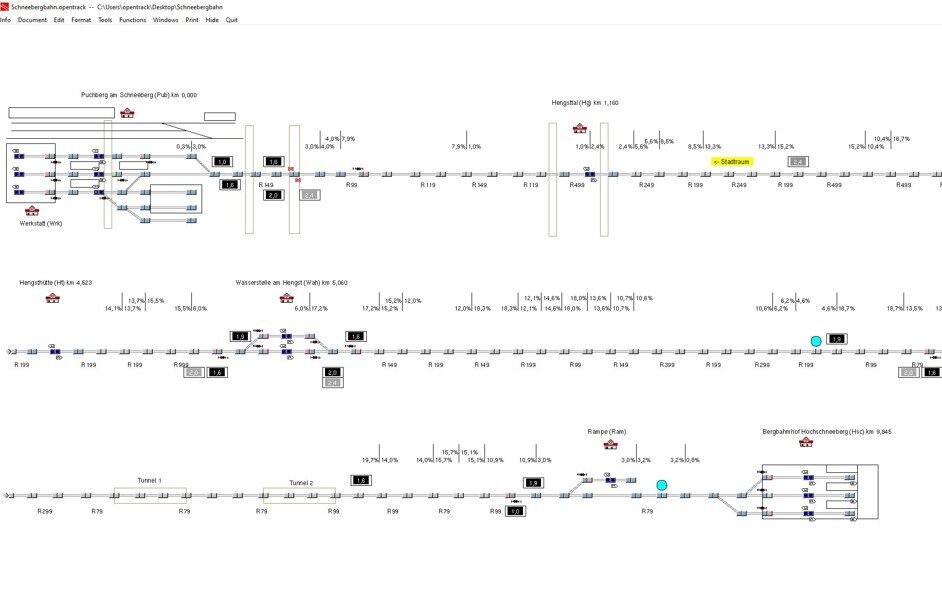 A robust consultancy integrates infrastructure, rolling stock, operations, energy, and signaling as a single system.
Common mistakes when hiring a railway consultancy
There are common mistakes that are frequently made when contracting these types of services. The first is awarding contracts based on a generalist resume or corporate prestige, without verifying whether the company has the actual capacity to integrate operations, simulation, design, and decision-making. The second is selecting a consulting firm that is strong in only one discipline, such as infrastructure or signage, expecting that this to be sufficient to handle a systemic project.
Another common mistake is requesting overly formal and impractical deliverables. Sometimes, firms are hired that produce a large volume of documentation but fail to address the project's critical questions. A good contracting process should demand clarity on the service model, analysis of alternatives, operational validation, decision traceability, and actionable recommendations. It's not about accumulating reports, but about making better decisions.
Mistakes to avoid
- Choosing based on general reputation, without reviewing specific technical capabilities for the railway system.
- Awarding a contract to a company that excels in one discipline, but not in the integration between disciplines.
- Advance to design without closing the operating model and capacity validation.
- Not comparing alternatives with a clear and traceable methodology.
- Underestimating the relationship between CAPEX, future operation, and maintainability.
What to consider before choosing a railway consulting firm
From a technical and commercial purchasing perspective, there are five criteria that should be reviewed with particular care. The first is understanding the problem: if the company only talks about engineering, but not about service and operation, the foundation is already weak. The second is its ability to integrate disciplines: it is not enough to simply state that it works as a team; it must demonstrate how it links infrastructure, simulation, operation, systems, and economic evaluation.
The third is methodological depth. A reputable consulting firm should explain how it defines alternatives, compares them, and validates its hypotheses. The fourth is the usefulness of its deliverables. The best teams translate complexity into clear, understandable, and actionable decisions. The fifth is alignment with the project type: not all teams are equally suited for rail connections, urban systems, yards, terminals, passenger operations, or mixed solutions with a logistics component.
Recommended evaluation criteria
Ability to understand the project beyond a single technical discipline.
Proven experience in operational analysis and early validation.
Clear workflow for defining, comparing, and recommending alternatives.
Results geared towards decision-making, not just extensive documentation.
Where do InnoBahn and Innomec add value within this scheme?
If this logic is applied to the brand ecosystem, InnoBahn's natural entry point is at the stage where the project still needs solid definition. The website itself positions the company in planning and connection, design and simulation, service optimization, and technological benchmarking, with a service structure organized into technical cards and a narrative focused on studies, models, and reports for decision-making.
This makes particular sense during the conceptualization, alternatives analysis, operational simulation, service definition, fleet planning, and capacity assessment phases. At this stage, the value lies in reducing uncertainty and building a solid decision basis before committing to major investments.
Innomec, on the other hand, makes more sense as an applied engineering arm and for specific technical solutions when a project needs to move from strategy to more concrete developments, technical interfaces, or implementation solutions. Maintaining this separation helps the article avoid confusing brands or promises: InnoBahn leads the railway and systems logic; Innomec can step in where applied engineering and technical execution add complementary value.
Conclusion
Choosing a railway consultancy should not be based solely on general experience, business reputation, or volume of previous projects. It should be based on their ability to understand the complete problem, structure alternatives, validate operations, integrate disciplines, and reduce uncertainty before the project enters a costly implementation phase.
A well-defined railway project from the outset not only reduces risks, but also improves the quality of the investment, increases operational robustness, and enhances the chances of long-term success. In this sense, a well-selected railway consultancy is not an incidental cost; it is a core component of project quality.
Frequently Asked Questions
When is it advisable to hire a railway consultancy?
Ideally, it should be incorporated in the early stages, when service objectives, alternatives, and investment criteria are still being defined. That's where it adds the most value.
What is the difference between railway design and railway simulation?
The design proposes a solution; the simulation allows us to validate whether that solution will work operationally under realistic conditions and with the expected service levels.
What should a client ask for in a railway consultancy tender?
It should require a clear methodology, evaluation of alternatives, operational validation, traceability of decisions, and deliverables that are actually useful for making decisions.
Why isn't experience in civil engineering or signage enough?
Because the railway system depends on the integration of multiple subsystems. A single specialty does not guarantee operational consistency or overall performance.
Are you evaluating a railway project?
Defining the solution correctly from the beginning reduces risks, improves decision-making, and strengthens the project's technical foundation.